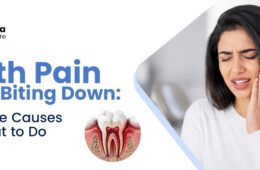
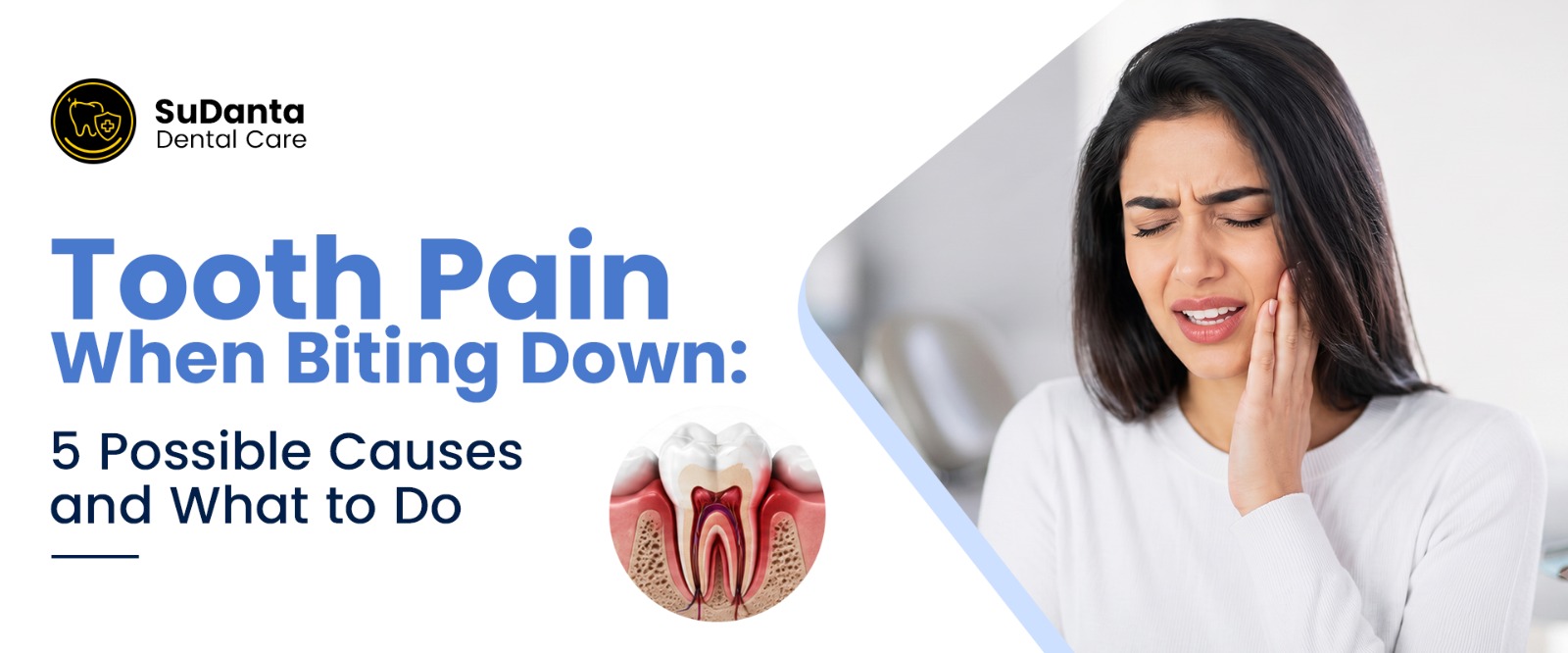
Pain when biting down often means that pressure is reaching an inflamed area inside the tooth or in the tissue around it. Finding the exact trigger early usually keeps treatment simple.
You take a bite of food and a sudden jolt of pain shoots through your tooth. Or maybe it is a dull ache that shows up every time you chew. Either way, tooth pain when biting down is not something to brush off. It usually means something specific is going on inside or around the tooth, and figuring out what it is helps you know how urgently you need care.
Tooth pain when biting down usually points to one of five common causes. tooth decay or a cavity, a cracked tooth, an infected tooth or abscess, gum disease, or a filling or crown that sits too high. Sharp, sudden pain often signals a crack, while a dull ache that lingers points more toward decay or gum trouble, and constant throbbing pain suggests an infection. Sudanta Dental Care in Manikonda, Hyderabad recommends a same-day exam for any pain that does not ease within a day or two, since early diagnosis keeps treatment simple.
What Are the Most Common Causes of Tooth Pain When You Bite Down?
Not all tooth pain feels the same, and the type of pain often points toward a specific cause. Sharp, quick pain that fades right after biting usually suggests a crack. A dull, lingering ache that builds slowly often points to a cavity or gum irritation. Throbbing pain that does not let up, especially with swelling, usually signals an infection. Pain that feels like the tooth is bruised, or that only happens on one particular tooth, can point to a filling or crown that sits too high.
| Type of Pain | Likely Cause |
| Sharp, sudden pain that fades quickly | Cracked tooth |
| Dull ache that builds gradually | Cavity or tooth decay |
| Constant throbbing, worse over time | Abscess or infection |
| Soreness only near the gum line | Gum disease |
| Pain only on one specific tooth after dental work | High filling or crown |
This table is a starting point, not a diagnosis. A dentist can confirm the exact cause with a physical exam, a bite test, and an X-ray if needed.
Could a Cavity or Tooth Decay Be Causing Your Pain?
Tooth decay is one of the most common reasons for pain when biting down. As decay eats through the enamel and reaches the sensitive inner layers of the tooth, pressure from chewing can trigger a dull ache or sharp twinge. Cavities often come with added sensitivity to sweet or cold food, and in some cases you might notice a visible dark spot or a rough edge on the tooth.
Dental caries remain widespread across India, with the National Oral Health Survey recording caries prevalence at over 80 percent among adults aged 35 to 44. This makes tooth decay one of the most likely explanations if your pain has built up gradually rather than appearing suddenly. A dentist treats a cavity by removing the decayed portion and placing a filling, or a dental crown if the decay has spread further into the tooth structure.
Small cavities often cause little more than mild sensitivity, but decay left untreated for months can reach the nerve and turn a simple filling into a root canal. This is one reason dentists recommend routine checkups even when nothing feels wrong, since early decay is far easier and cheaper to treat than advanced decay.
Is a Cracked Tooth the Reason It Hurts When You Chew?
A cracked tooth can be tricky to catch, since the crack is often too small to see and does not always show up on an X-ray. Cracks usually happen from grinding your teeth at night, biting down on something hard, or an old filling that has weakened the tooth over time. The pain tends to be sharp and sudden, felt right when you bite down, and then fades quickly once the pressure is released.
If your dentist suspects a crack, they may ask you to bite on a small stick or cotton roll to help pinpoint the exact tooth. Treatment depends on how deep the crack goes, ranging from a simple filling or crown to a root canal treatment if the crack has reached the nerve. Left untreated, a crack can slowly worsen and eventually split the tooth.
Cracks are also more common than many people realize, since they can develop quietly over years of chewing on hard foods like ice, nuts, or hard candy. If you grind your teeth at night, you face a higher risk, since the constant pressure weakens enamel over time. Catching a crack early, before it spreads deeper into the tooth, often means the difference between a simple filling and a more involved treatment.
Could Teeth Grinding Be Making It Worse?
Many people grind or clench their teeth without realizing it, especially during sleep. This repeated pressure wears down enamel and can create or worsen small cracks, which is why some patients wake up with a sore jaw or notice pain when they first bite down in the morning. A dentist can often spot signs of grinding, such as flattened or worn edges on your teeth, and may recommend a night guard to protect your teeth going forward.
Could an Abscess or Infection Be Behind the Pain?
An abscess is a pocket of infection that usually forms at the root of a tooth, and it is one of the more serious causes of pain when biting down. The pain is often constant and throbbing rather than sharp and brief, and it may come with swelling, a bad taste in your mouth, or even a mild fever. Pressing on the tooth or chewing on that side usually makes the pain worse.
An abscess needs prompt attention, since the infection can spread to nearby teeth, gum tissue, or in rare cases further into the jaw. Treatment typically involves draining the infection and a root canal to save the tooth, or extraction if the tooth cannot be saved. Waiting too long with an abscess raises both the risk and the eventual cost of treatment.
An untreated abscess rarely stays contained. The infection can travel along the jawbone or into surrounding soft tissue, and in severe cases it can affect breathing or swallowing if it reaches the throat. If extraction becomes necessary, replacing missing teeth afterward with an implant, bridge, or denture keeps your bite and smile intact.
Can Gum Disease or a High Filling Cause Pain When Biting Down?
Two very different problems can both cause the same symptom of pain while chewing, and it helps to understand each one separately.
How Gum Disease Leads to Pain When Chewing
When gums become inflamed or infected, the bone and tissue supporting the tooth can weaken over time. This can make teeth feel loose or sensitive, and biting down puts pressure on tissue that is already inflamed, which triggers pain. Gum disease often comes with other warning signs, such as bleeding gums, bad breath, or gums that look red and swollen rather than firm and pink. Treating gum disease early, through a deep cleaning and better home care, usually stops the pain and prevents further bone loss around the tooth.
How a High Filling or Crown Causes Pain
If you recently had a filling or crown placed and started noticing pain right after, the restoration may be sitting slightly too high. This throws off your bite, so that tooth takes more pressure than it should every time you chew. The fix is usually simple, since your dentist can adjust and smooth down the filling or crown in a short visit.
When Is This a Dental Emergency, and What Should You Do Until Your Appointment?
Most causes of tooth pain when biting down are not medical emergencies, but a few signs mean you should not wait.
Red Flag Symptoms That Need Same-Day Care
Seek urgent care if you notice facial swelling, a fever, pain that keeps you up at night, or pus near the gum line. These signs often point to a spreading infection, which can become dangerous if it is not treated quickly. Severe pain after an injury, such as a fall or a sports impact, also needs prompt attention to check for a fracture.
What You Can Safely Do at Home Right Now
Until you can see a dentist, avoid chewing on the painful side and stick to softer foods. Rinse gently with warm salt water to reduce irritation, and use a cold compress on the outside of your cheek if there is any swelling. Over the counter pain relief can help manage discomfort, but it only masks the pain and does not treat the underlying cause, so a dental visit is still necessary.
How Do You Decide When to See a Dentist?
As a general rule, any tooth pain that lasts more than a day or two is worth having checked, even if it feels mild. Ask yourself a few quick questions before you book. Does the pain come and go, or is it constant. Is it getting worse instead of better. Do you notice any swelling, bad taste, or fever alongside it. Has the pain started right after a filling, crown, or dental injury. Your answers help your dentist narrow down the cause faster once you are in the chair.
Regular dental checkups also make a real difference here, since many of these causes, especially decay and gum disease, show early warning signs long before pain shows up. Catching a problem at a routine visit is almost always simpler and less costly than waiting until it hurts to bite down.
What to Do vs. What Not to Do
What to Do
- See a dentist promptly if pain lasts more than a day or two
- Rinse with warm salt water to ease irritation
- Chew on the opposite side until you are seen
- Keep track of when the pain started and what triggers it
What Not to Do
- Do not ignore pain that keeps getting worse
- Do not place aspirin directly on the gum, since it can burn the tissue
- Do not rely only on painkillers instead of getting the cause treated
- Do not delay care if you notice swelling or fever
Frequently Asked Questions
Q: Can tooth pain from biting down go away on its own?
A: Mild sensitivity sometimes settles down, especially if it was caused by a minor irritation. But pain caused by decay, a crack, or an infection will not resolve on its own and usually gets worse without treatment.
Q: Why does my tooth only hurt when I bite down and not otherwise?
A: This pattern often points to a crack, a high filling, or a cavity, since pressure from chewing is what triggers the pain in these cases. A dentist can use a bite test to help confirm which one applies to you.
Q: Can teeth grinding cause pain when biting down?
A: Yes, grinding your teeth at night puts repeated pressure on your teeth and can lead to cracks, worn enamel, and jaw soreness that shows up while chewing. A night guard is often recommended to protect your teeth if grinding is confirmed.
Q: Is tooth pain when biting down always a sign of a cavity?
A: No, it can also point to a cracked tooth, an abscess, gum disease, or a filling that sits too high. The exact cause needs a dental exam to confirm, since several conditions can feel similar at first.
Q: How long should I wait before seeing a dentist for this kind of pain?
A: It is best not to wait more than a day or two, since most causes of this pain get worse rather than better over time. Any swelling, fever, or pain that disrupts sleep needs same-day attention.
Q: Can a sinus infection cause tooth pain when biting down?
A: Yes, the roots of your upper back teeth sit close to the sinuses, so sinus pressure can sometimes feel like tooth pain. This is usually accompanied by facial pressure, congestion, or a runny nose, and it is worth mentioning to your dentist if these symptoms overlap.
How Sudanta Dental Care Approaches Tooth Pain
At Sudanta Dental Care in Manikonda, Hyderabad, tooth pain when biting down gets a thorough exam before any treatment is suggested. The team checks for cavities, cracks, gum health, and bite alignment using a physical exam and X-rays where needed, so the real cause is identified rather than just the symptom being treated. Patients get a clear explanation of what is happening and a straightforward plan to fix it, without unnecessary procedures.
Ready to Get Your Tooth Pain Checked?
Book an appointment with Sudanta Dental Care in Manikonda, Hyderabad to find out exactly why your tooth hurts when you bite down and get it treate