A dull ache at the back of your jaw, or a sudden sharp pain near your last molar, often means a wisdom tooth is causing trouble. A swollen wisdom tooth or one that feels tender and infected raises the same question either way. The natural next question is whether you need to get it removed right away or whether it is safe to wait and watch. The honest answer is that it depends on what is actually happening with that tooth, not just on the pain itself.
You should consider extracting a wisdom tooth if it is impacted, infected, decayed, or damaging nearby teeth, since these problems rarely resolve on their own. Waiting is usually safe if the tooth has fully erupted, sits in a healthy position, and causes only mild, occasional discomfort. Sudanta Dental Care in Manikonda, Hyderabad recommends an X-ray based evaluation before deciding either way, since the tooth’s exact position matters more than the pain level alone.
What Causes Wisdom Tooth Pain in the First Place?
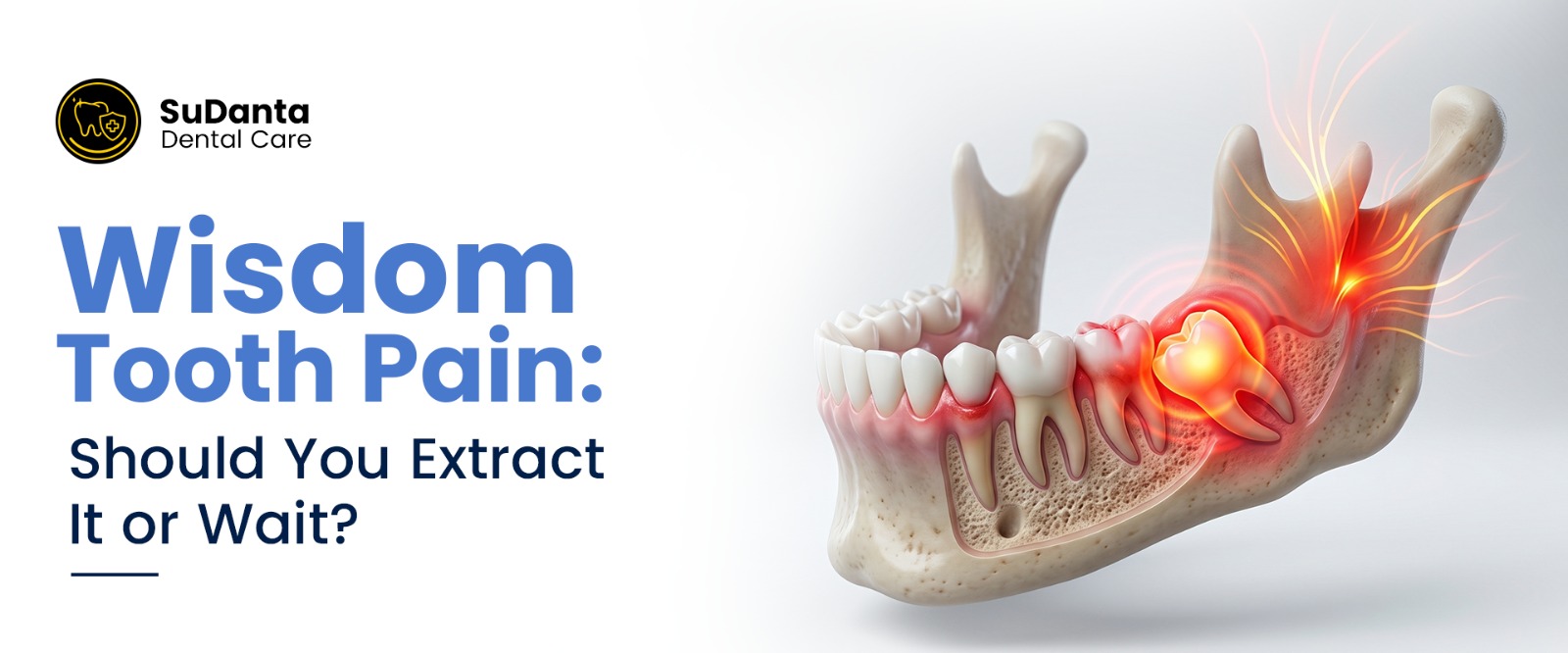
Wisdom teeth are the last set of molars, and they often struggle to find enough room in the jaw. When there is not enough space, the tooth can become impacted, meaning it stays partly or fully trapped under the gum or bone. A partially erupted tooth leaves an opening where food and bacteria collect, which often leads to pericoronitis, a painful gum inflammation around the tooth. Other causes include the wisdom tooth growing at an angle and pressing into the molar next to it, decay forming in a tooth that is hard to clean, or a fluid filled cyst developing around an unerupted tooth.
Each of these causes points toward a different next step, which is why the pain alone does not tell you whether to extract or wait. The position and condition of the tooth, confirmed through an exam and X-ray, is what actually guides that decision.
Age also plays a role in how these causes develop. Wisdom teeth typically start coming through between the late teens and mid twenties, and problems often show up during this window as the jaw runs out of space. Some people never develop any wisdom teeth at all, while others have one or more that stay fully hidden under the gum without ever causing symptoms. This is why two people of similar age can have completely different experiences with the same tooth.
| Symptom | What It Could Mean |
| Mild soreness as the tooth comes in | Normal eruption |
| Swollen, red gum around the tooth | Pericoronitis |
| Bad taste or smell near the tooth | Infection |
| Jaw stiffness or difficulty opening your mouth | Swelling from infection or impaction |
| Pain that worsens while chewing | Impacted or angled tooth pressing on the next tooth |
This table is a general guide to help you describe your symptoms accurately at your appointment, not a substitute for an exam.
When Is It Safe to Wait Instead of Extracting Right Away?
Waiting is usually a reasonable choice when the wisdom tooth has fully come through the gum, sits upright in a normal position, and does not press against the neighboring tooth. If you can clean around it properly with a toothbrush and floss, the risk of decay or gum infection stays low. Mild, occasional soreness while it finishes erupting is common and does not automatically mean the tooth needs to come out.
In these cases, dentists usually recommend monitoring the tooth with a checkup and X-ray every year or so, rather than removing a tooth that is not causing real problems. This approach avoids unnecessary surgery while still keeping an eye on any changes.
Monitoring works best when you are genuinely consistent with it. Skipping checkups for several years because the tooth feels fine can mean an emerging problem, such as slow decay or a shifting position, goes unnoticed until it becomes more painful or complicated to treat. A yearly X-ray is a small commitment compared to catching an issue early.
When Should You Choose Extraction Instead of Waiting?
Extraction becomes the better choice when the tooth is impacted, repeatedly infected, decayed beyond simple treatment, or pushing against and damaging the tooth next to it. Recurring pericoronitis, where the gum around the tooth keeps getting inflamed and infected, is one of the clearest signs that waiting will likely lead to the same problem again and again.
| If Your Wisdom Tooth Is… | Likely Recommendation |
| Fully erupted, upright, and easy to clean | Safe to wait and monitor |
| Impacted or stuck under the gum | Extraction usually recommended |
| Causing repeated gum infection (pericoronitis) | Extraction usually recommended |
| Decayed and hard to treat due to its position | Extraction usually recommended |
| Pressing against or damaging the next tooth | Extraction usually recommended |
| Associated with a cyst on X-ray | Extraction usually recommended |
This table reflects general patterns, not a guaranteed outcome for your specific tooth. Your dentist will confirm the right path after reviewing your X-ray in person.
It is worth noting that some dentists also recommend preventive extraction even before pain starts, particularly if an X-ray shows the tooth is angled in a way that is likely to cause problems later. This is a judgment call that depends on your specific anatomy, and it is reasonable to ask your dentist directly why they are or are not recommending this approach for your case.
How Will a Dentist Decide Whether You Need an Extraction?
A dentist does not rely on pain alone to make this call. The decision usually combines a clinical examination of the gum and surrounding teeth with a digital X-ray that shows the tooth’s exact position and angle. The X-ray also reveals how far the root has developed, since less developed roots generally make extraction simpler.
Your dentist checks whether there are any signs of infection, such as swelling or pus, and looks for damage to the tooth next to it. They also assess how much bone supports the tooth and the surrounding structures, since this affects both the difficulty of extraction and how well the area heals afterward. Taken together, these findings, not the pain level you report, are what actually determine the recommendation.
When Should You See a Dentist Immediately?
Most wisdom tooth discomfort can wait for a routine appointment, but a few signs mean you should be seen right away. Seek prompt care if you notice a fever, swelling in your face or jaw, difficulty swallowing, or trouble opening your mouth fully. Pus near the tooth or pain that feels severe and uncontrolled with regular pain relief also needs urgent attention, since these can point to a spreading infection.
What Happens If You Keep Waiting and Ignore the Pain?
Ignoring wisdom tooth pain does not usually make the underlying problem go away. An impacted tooth stays impacted, and repeated gum infections tend to come back, often worse each time. Left untreated, the pressure from an impacted wisdom tooth can gradually damage the root or bone of the neighboring molar, sometimes requiring restorative treatment later, and a cyst around an unerupted tooth can slowly grow and affect surrounding bone.
The tooth also does not become easier to remove by waiting longer in most cases. In fact, root development can make extraction more involved later on, particularly once you are well into your late twenties or beyond. This is one of the reasons dentists prefer to make this decision earlier rather than later, once real problems appear.
How Can You Manage the Pain While You Decide?
A painful wisdom tooth does not have to stay uncomfortable while you wait for your appointment. Whether you end up waiting or moving toward extraction, you can manage discomfort safely in the short term. Rinse gently with warm salt water several times a day to reduce irritation and bacteria around the gum. A cold compress on the outside of your cheek can ease swelling, and over the counter pain relief such as ibuprofen or paracetamol helps in the meantime. Stick to softer foods and avoid chewing directly on that side until the area feels better.
These steps only manage the symptom and do not fix the underlying cause. If the pain keeps returning or gets worse, it is a sign that the tooth needs a proper evaluation rather than ongoing home care.
Brushing gently around the area, even when it is sore, also helps rather than hurts. Skipping oral care near a painful wisdom tooth often allows more plaque and bacteria to build up, which can make the underlying inflammation worse rather than giving it a chance to settle.
What Should You Expect If You Choose Extraction?
Wisdom tooth extraction, sometimes called wisdom tooth surgery for more complex cases, is a routine outpatient procedure that usually takes under an hour. Your dentist will numb the area with local anesthesia, and for more complex or impacted teeth, sedation may be offered for added comfort. The tooth is removed through the gum, and stitches are sometimes placed to support healing.
Recovery Timeline After Extraction
Wisdom tooth removal recovery follows a fairly predictable pattern. Swelling and soreness typically peak around day two or three, then improve steadily over the following week. Most people return to normal activity within a few days, while full healing of the gum tissue can take up to two weeks. Following your dentist’s aftercare instructions, especially avoiding smoking and vigorous rinsing in the first couple of days, helps prevent complications such as dry socket.
Sticking to soft foods for the first few days, using an ice pack on the outside of your cheek, and taking any prescribed medication on schedule all make the first week noticeably more comfortable. Most people find that the discomfort eases day by day, with only mild stiffness left by the end of the first week.
How Do You Decide What’s Right for You?
Ask yourself a few honest questions before your appointment. Has the pain come back more than once. Do you notice a bad taste or swelling near the tooth. Can you actually reach and clean around the area properly. Has your dentist already flagged the tooth as impacted or poorly positioned on a previous X-ray. If you answered yes to any of these, extraction is likely the more practical path. If none apply and the discomfort is mild and occasional, monitoring with regular checkups may be enough for now.
Pros and Cons of Extracting Now vs. Waiting
Extracting Now
Pros
- Removes the source of recurring pain and infection for good
- Prevents damage to the neighboring tooth from ongoing pressure
- Often easier to recover from at a younger age, before roots fully form
Cons
- Involves a minor surgical procedure and a short recovery period
- Comes with some cost and time off from normal activity
- Carries a small risk of complications such as dry socket
Waiting and Monitoring
Pros
- Avoids surgery for a tooth that may never cause serious problems
- No recovery time or procedure cost right now
- Reasonable option when the tooth is healthy, upright, and easy to clean
Cons
- Requires regular checkups and X-rays to catch problems early
- Pain or infection can return unpredictably if the situation changes
- Extraction may become more complex if delayed too long once problems start
Frequently Asked Questions
Q: Can wisdom tooth pain go away without extraction?
A: Mild, occasional soreness from a tooth that is still erupting normally can settle on its own. But pain from infection, impaction, or decay usually returns and does not resolve without treatment.
Q: Does age affect whether you should extract or wait?
A: Yes, extraction is generally simpler and recovery is faster at a younger age, since the tooth roots are not yet fully developed. Waiting into your thirties or later can make the same procedure more involved.
Q: Can you wait too long to remove a wisdom tooth?
A: Yes, waiting too long after problems have already started can allow infection to recur, damage the neighboring tooth, or make the roots more developed and harder to remove. Early evaluation helps avoid this.
Q: Is it normal for wisdom tooth pain to come and go?
A: Yes, this pattern is common with pericoronitis, where the gum around a partially erupted tooth flares up periodically. Repeated flare-ups are usually a sign that extraction will prevent the cycle from continuing.
Q: How urgent is wisdom tooth extraction once it starts hurting?
A: It depends on the cause, but pain along with swelling, fever, or difficulty opening your mouth needs prompt attention. Mild discomfort without these signs can usually wait for a routine appointment.
Q: What happens if an impacted wisdom tooth is never removed?
A: It can continue causing intermittent infections, gradually damage the neighboring tooth’s root or bone, or allow a cyst to form and grow around it over time. Regular monitoring is essential if you choose not to remove it.
How Sudanta Dental Care Approaches Wisdom Tooth Pain
At Sudanta Dental Care in Manikonda, Hyderabad, every decision about a wisdom tooth starts with a proper exam and X-ray, not a default recommendation to extract. The team looks at the tooth’s position, whether it is impacted, and whether it is affecting neighboring teeth before suggesting extraction or monitoring. Patients get a clear, honest explanation of their options so they can make an informed choice about their own care.
Ready to Get Your Wisdom Tooth Checked?
Book an appointment with Sudanta Dental Care in Manikonda, Hyderabad to find out whether your wisdom tooth needs to come out or if it is safe to wait, based on a proper exam and X-ray.