Most people visit a dentist only when the pain becomes unbearable. By that time, a simple cavity has quietly turned into a root canal — or worse, a lost tooth that now needs an implant. The difference between easy treatment and complex treatment is almost always one thing: timing.
If you live in Manikonda, Puppalaguda, Narsingi, Kondapur, or the surrounding areas of Hyderabad, this complete guide helps you understand exactly when you need to stop waiting and walk through a dental clinic door.
What Makes a Dental Clinic the Best in Manikonda?
Before we talk about warning signs, let us quickly cover what separates a good dental clinic from an average one. This matters because not every clinic that puts up a signboard in Manikonda offers the same standard of care.
A genuinely good dentist in Manikonda will give you:
- Painless treatment using modern local anaesthesia and rotary instruments — not just skill with a needle
- Transparent pricing with a written estimate before treatment begins — zero hidden fees
- Experienced specialists — dedicated endodontists for root canals, implantologists for implants, orthodontists for braces — not one dentist doing everything
- Advanced technology — digital X-rays (80% less radiation than traditional), CBCT scans, intraoral cameras that let you see your own teeth on a screen
- Strict sterilisation protocols — WHO-compliant sterilisation of all instruments between patients
- Flexible appointment hours — evening and weekend slots so you do not need to take a half-day off work
- Consistent Google reviews — a real 4.8+ rating from real patients in your neighbourhood
Sudanta Dental Care in Manikonda ticks all these boxes. The clinic operates Monday to Sunday, 10 AM to 8 PM, holds a 5.0 Google rating, and is specifically built to serve families across the Manikonda, Lanco Hills, and Puppalaguda corridors. Every treatment plan is explained in plain language before work begins.
Why Manikonda Residents Delay Dental Visits — And Why That Is a Costly Mistake
In conversation after conversation at dental clinics across Hyderabad, the same three reasons come up for why people delay treatment:
- “It stopped hurting, so I thought it healed.” — Dental pain can disappear when the nerve inside a tooth dies. The infection is still there, spreading silently.
- “I was scared of the cost.” — The bitter irony is that the longer you wait, the more expensive the treatment becomes.
- “I was scared of the pain.” — Modern dentistry in 2026 is almost entirely painless. What people fear is the pain they are already feeling from the infection — the dentist actually takes that pain away.
Understanding these patterns helps you make a better decision. Now let us cover exactly what signs should send you straight to a dental clinic.
7 Signs You Need Immediate Dental Treatment
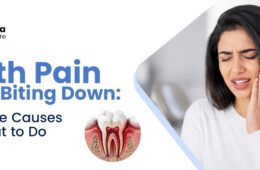
Sign 1: A Toothache That Lasts More Than 48 Hours
A toothache that persists for more than two days is never a “wait and see” situation. Dental pain that lingers means the infection has reached the pulp — the living tissue inside your tooth that contains nerves and blood vessels.
At this stage, the pain typically has one or more of these qualities: – Throbbing, pulsating pain that gets worse at night when you lie flat – Sharp, shooting pain triggered by biting or touching the tooth – Dull, constant ache that radiates to your ear, jaw, or head – Pain that gets worse with sweet, hot, or cold food or drink
A common mistake is to take a painkiller and wait. Painkillers mask the symptom. The infection keeps spreading — silently moving into the jawbone and potentially to adjacent teeth.
An X-ray at a dental clinic takes 5 minutes and immediately tells the dentist exactly what is happening inside that tooth. Early diagnosis at this stage often means a root canal can still save the tooth. Waiting may mean an extraction instead.
When to act: Within 24 hours of persistent toothache.
Sign 2: Sensitivity to Hot or Cold That Stays Longer Than 20 Seconds
A quick flash of sensitivity — the kind that makes you wince when ice cream touches your tooth — is fairly common and can be caused by thin enamel or gum recession. It is uncomfortable but not immediately alarming.
What IS alarming is when that sensitivity lingers. If you remove the hot or cold stimulus and the pain or ache continues for more than 20 seconds, it signals that the nerve inside your tooth is already affected.
This lingering sensitivity usually points to:
- A cracked tooth — even a hairline crack invisible to the naked eye lets temperature changes reach the nerve
- Deep decay reaching the dentin — the inner layer is far more sensitive than enamel
- Early pulpitis — inflammation of the pulp, the first stage of nerve involvement
- Gum recession exposing the root surface — roots have no enamel protection; they are extremely sensitive
Left untreated, lingering sensitivity progresses to full-blown, spontaneous toothache within weeks. Treated early, most of these conditions need only a filling or a desensitising treatment.
Sign 3: Swollen Gums, a Lump, or a Pimple-Like Bump Near a Tooth
If you see or feel a swelling in your gum — especially one that looks like a small bubble, pimple, or raised bump — this is called a dental abscess or fistula. It is a pocket of pus that your body is trying to drain from an active infection inside your tooth or the surrounding bone.
A dental abscess is not just uncomfortable. It is a medical emergency if it progresses. The infection can spread to your jaw, the floor of your mouth, your neck, or in severe cases — your bloodstream (a condition called sepsis).
Signs that a dental abscess is getting serious: – Swelling in your face, cheek, or jaw that is visibly growing – Fever above 38°C – A consistently bad taste in your mouth (pus draining) – Difficulty swallowing or breathing – Difficulty opening your mouth more than halfway
Any swelling in or around your mouth that does not go down within 24 hours deserves urgent dental attention. If the swelling affects your ability to swallow or breathe, go to a hospital emergency department immediately.
Sign 4: Bleeding Gums That Happen More Than Once
Most adults have experienced a little blood while brushing at some point. If it happens once and stops, it is usually a result of brushing too vigorously. If it keeps happening — especially if it happens every time you brush — it is your gums sending you a consistent warning signal.
Healthy gums do not bleed. Gums that bleed regularly have active inflammation. In dentistry, this is called gingivitis — the earliest, fully reversible stage of gum disease.
If gingivitis is left untreated, it progresses to periodontitis. Periodontitis destroys the bone and connective tissue that hold your teeth in their sockets. Once that bone is gone, it does not regenerate. Teeth become loose and eventually fall out or need extraction.
According to the World Health Organization, severe periodontal (gum) disease affects nearly 19% of the global adult population, making it one of the most widespread chronic health conditions worldwide.
The good news: at the gingivitis stage, a single professional cleaning (scaling and root planing) combined with better brushing and flossing at home can completely reverse the condition. The visit takes about an hour. That is all it takes to stop gum disease at its earliest stage.
Sign 5: A Loose Adult Tooth
Your adult teeth are designed to be fixed, stable, and permanent. An adult tooth that feels loose — even slightly — has a structural problem that needs professional attention immediately.
The most common reasons for a loose adult tooth:
- Advanced periodontitis — severe bone loss has reduced the bone support around the tooth to the point where it can no longer hold firmly
- Tooth grinding (bruxism) — excessive grinding wears down bone support and loosens teeth over time
- A physical injury — a fall, sports collision, or accident that has displaced or cracked the tooth at the root
- Untreated dental abscess — bone destruction from a spreading infection
A loose tooth is not automatically a lost tooth — especially if you act quickly. Early intervention can sometimes stabilise the tooth with splinting, deep cleaning, or regenerative bone procedures. Waiting makes the tooth progressively less salvageable.
Sign 6: A Cracked, Broken, or Chipped Tooth
Even when a cracked tooth does not hurt right away, do not ignore it. The crack creates an entry point for bacteria directly into the inner layers of the tooth. Decay follows. Infection follows. What started as a painless chip becomes a painful, infected tooth within weeks or months.
Cracks also behave unpredictably. A tooth that bears normal chewing forces with a hidden crack can fracture completely without warning — often at a highly inconvenient moment.
If you chip or crack a tooth: 1. Rinse your mouth gently with warm salt water 2. Save any large broken pieces in a clean container with a little milk or saline 3. Apply a cold compress to the outside of your cheek to reduce swelling 4. See a dentist the same day, or within 24 hours at the latest
Treatment options depend on the extent of the crack: composite bonding for small chips, a crown for cracks affecting the cusp, or root canal followed by a crown if the crack has reached the pulp.
Most mouth ulcers — the small, painful sores inside your cheeks, lips, or tongue — are harmless and heal on their own within 7–10 days. No treatment needed.
But if an oral sore, white patch, red patch, or unusual lump inside your mouth persists beyond 2 weeks, you must get it checked by a dentist or oral medicine specialist.
Persistent oral lesions can be early signs of:
- Oral submucous fibrosis — a pre-cancerous condition very common among people who chew tobacco, gutka, or betel nut (paan). The mouth gradually becomes stiff and difficult to open.
- Leukoplakia — white patches on the gums, cheeks, or tongue that can sometimes transform into cancer
- Erythroplakia — red patches that have a higher risk of malignant transformation than white patches
- Oral cancer — one of the most common cancers in India, particularly among tobacco users
India has one of the highest rates of oral cancer in the world. Early-stage oral cancer has a 5-year survival rate of over 80%. Late-stage oral cancer detected after it spreads drops that figure dramatically. A two-minute visual check by your dentist can literally be life-saving.
The Real Cost of Ignoring Dental Problems
Here is the hard truth: dental problems never stay the same. They always grow — in complexity, in discomfort, and in the number of appointments needed to fix them.
A small cavity treated early needs a simple filling and one visit. The same cavity ignored for a few months reaches the nerve and needs a root canal plus a crown — multiple visits, a much longer procedure. Ignored further, the tooth becomes non-restorable and needs extraction followed by an implant — a multi-month process involving surgery and healing time.
The pattern repeats across every type of dental problem. Every level of delay multiplies the complexity of treatment. More importantly, it multiplies your discomfort.
Pros and Cons of Early vs. Late Dental Treatment
| Factor | Early Treatment | Delayed Treatment |
| Cost | Lowest | Multiplied significantly |
| Procedure complexity | Simple (filling, cleaning) | Complex (RCT, implant, surgery) |
| Pain experienced | Minimal | Severe (before and sometimes after) |
| Recovery time | Same day | Days to weeks |
| Tooth preserved? | Almost always | Not guaranteed |
| Risk of complications | Very low | Higher (spread of infection) |
| Number of visits needed | 1–2 | 3–10+ |
LSI and Supporting Keywords Covered in This Article
To help this article rank across relevant searches, the following topics are naturally covered: best dentist Manikonda, dental clinic near me Manikonda, emergency dental treatment Hyderabad, toothache causes and treatment, bleeding gums treatment, loose tooth adult, dental abscess signs, teeth sensitivity treatment, oral cancer signs India, root canal vs extraction, when to see a dentist.
About Sudanta Dental Care — Your Neighbourhood Dental Home in Manikonda
Sudanta Dental Care is a full-service dental clinic located in Manikonda, Hyderabad, serving patients from Puppalaguda, Narsingi, Gachibowli, Kondapur, Lanco Hills, and the surrounding residential communities.
What makes Sudanta different: – Full-family dental care — from a child’s first check-up to a senior’s dentures – Painless treatment protocols using modern anaesthesia and rotary technology – Specialists in root canal, implants, braces, whitening, and cosmetic dentistry – Digital X-rays, advanced diagnostics, and sterilised instruments – Transparent pricing — written estimates before every procedure – Open 7 days a week, 10 AM to 8 PM — including Sundays and public holidays – 5.0 Google rating — consistently rated the best dental care experience by local patients
Do not wait until the pain becomes unbearable. If any of the 7 signs above sound familiar, book an appointment today. Early treatment is always the smarter, cheaper, and kinder choice for your health.
Frequently Asked Questions
Q: How do I find the best dentist in Manikonda near me?
A: Look for a clinic with consistently high Google reviews (4.8+), specialists on staff, transparent pricing, and modern equipment. Ask if they offer digital X-rays and painless treatment protocols. Sudanta Dental Care in Manikonda meets all these criteria.
Q: Is a toothache always a sign of a cavity?
A: Not always. Toothache can also be caused by gum disease, a cracked tooth, grinding, a dental abscess, or even sinus pressure. A dentist examination and X-ray will identify the exact cause.
Q: Can bleeding gums heal on their own?
A: Mild, occasional bleeding from brushing too hard can resolve with gentler brushing. But recurring bleeding always needs professional evaluation to rule out gum disease.
Q: How often should I visit a dentist even when I feel no pain?
A: Every 6 months. Many serious dental conditions — including early-stage gum disease, cavities between teeth, and oral lesions — have no pain in their early stages.
Q: What happens if I completely ignore a dental abscess?
A: The infection can spread to the jawbone (osteomyelitis), the soft tissues of the neck and face (Ludwig’s angina), or the bloodstream (sepsis). These are life-threatening conditions requiring hospitalisation. A dental abscess must never be ignored.
Q: Are children’s dental problems different from adults?
A: Yes. Children are more prone to early decay from sugary foods and need preventive treatments like fluoride application and pit-and-fissure sealants. Sudanta Dental Care provides full paediatric dental services.